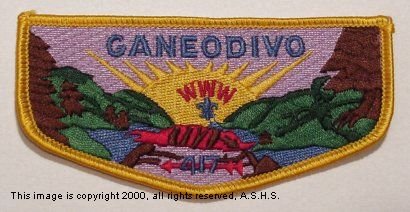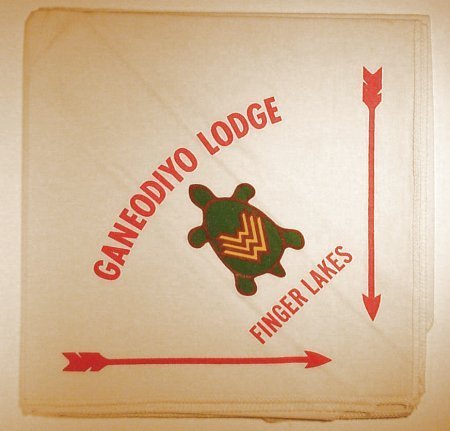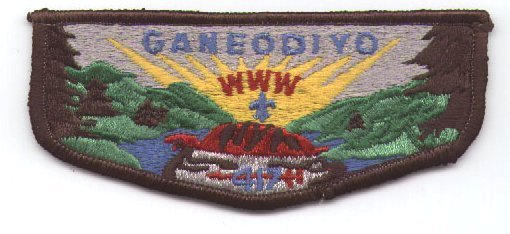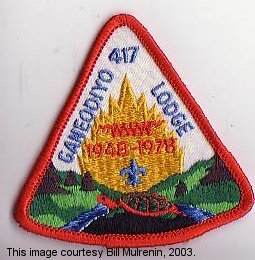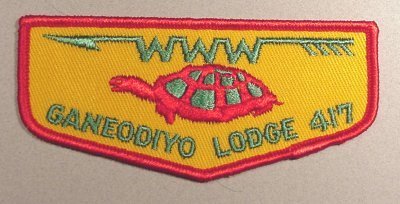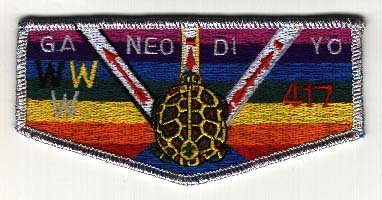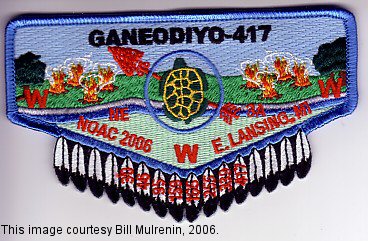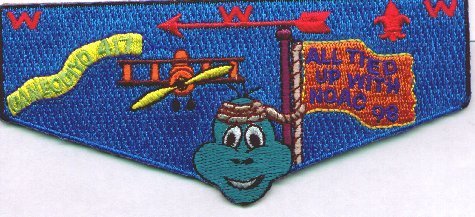
#19 Ganeodiyo Lodge

This slideshow requires JavaScript.

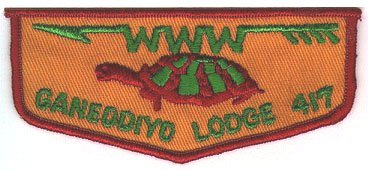
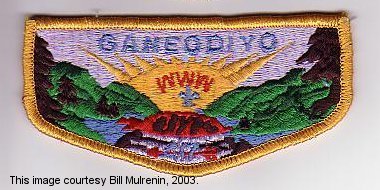
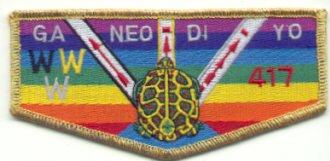
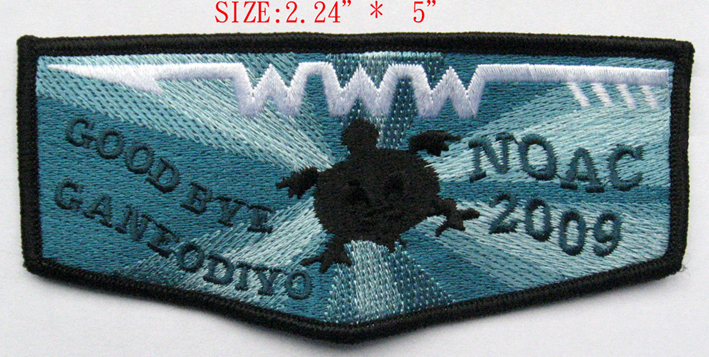
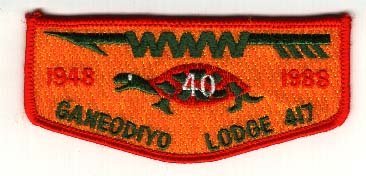
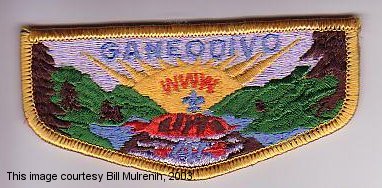
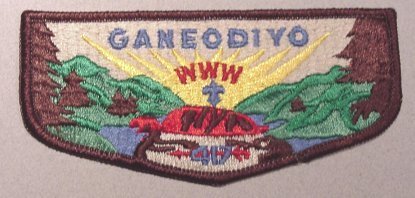
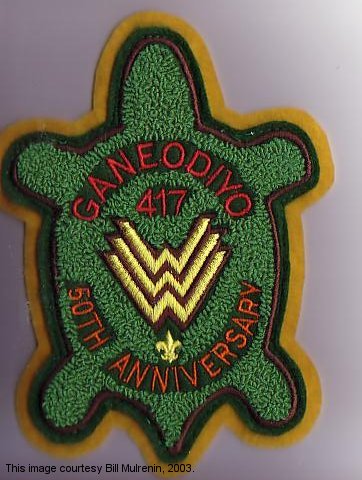
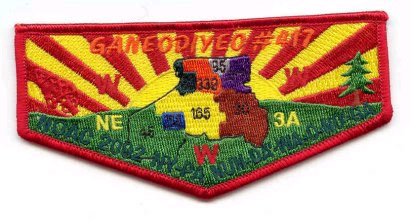
Ganeodiyo the Lodge

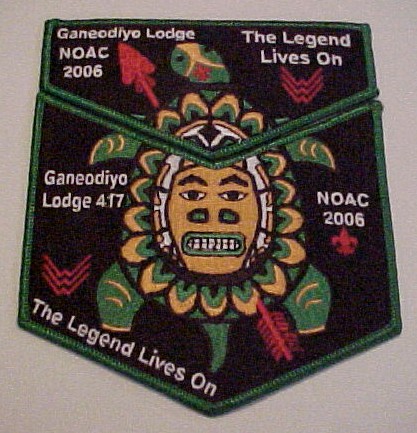
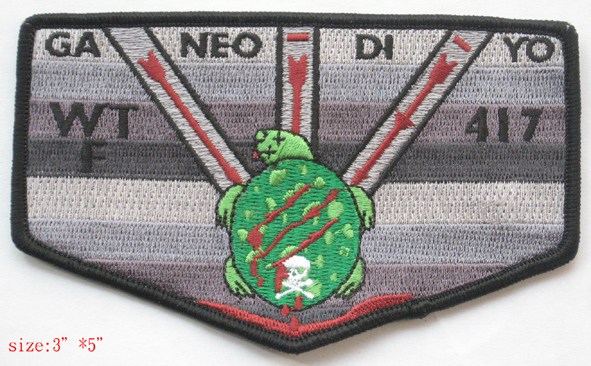
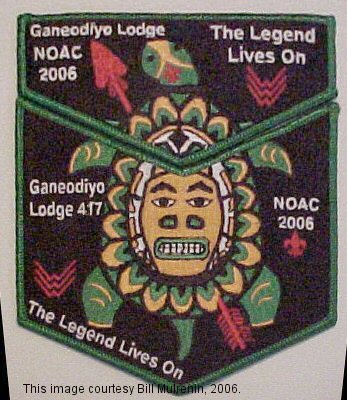
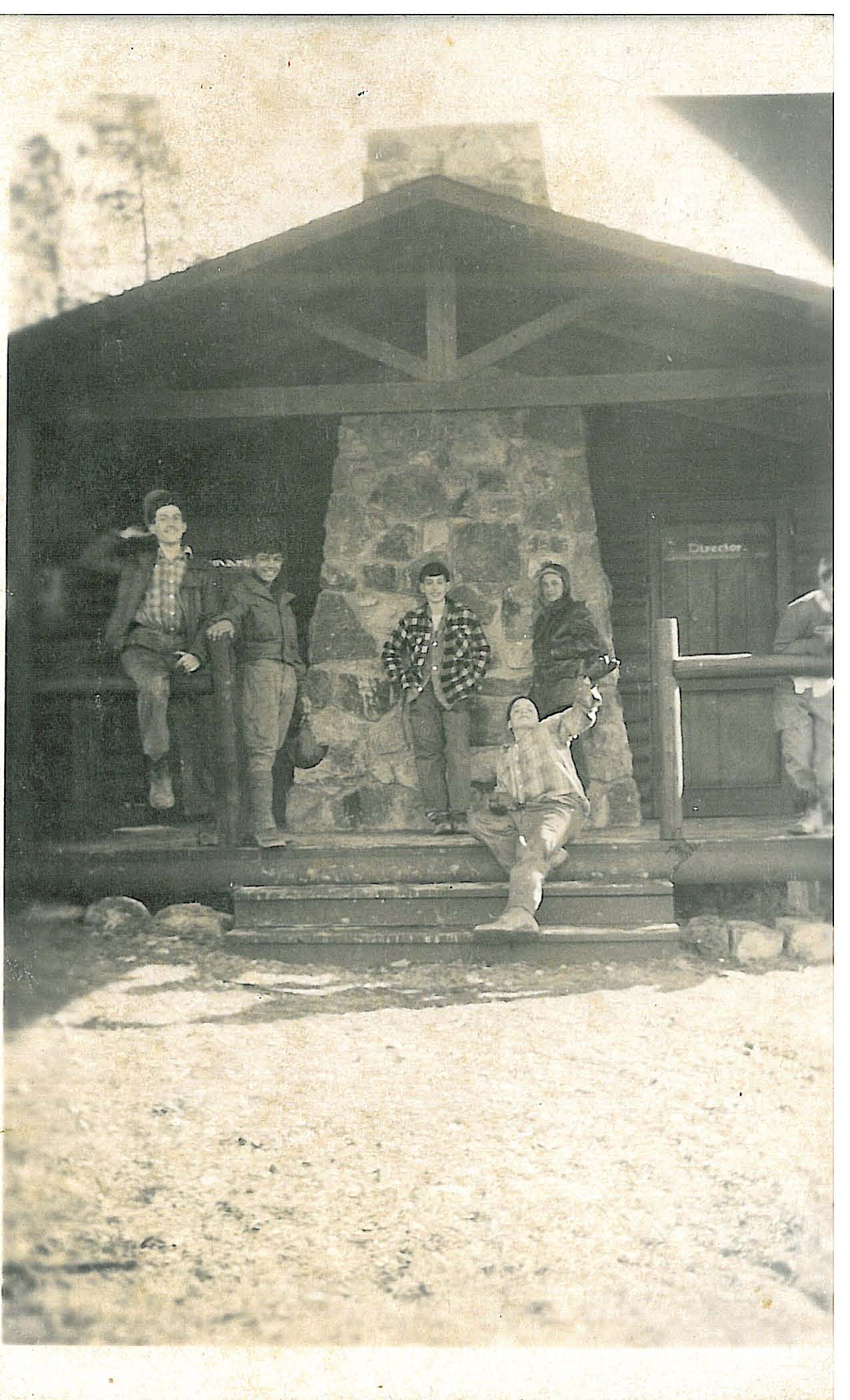
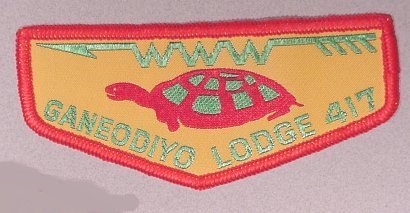
In the autumn of 1948, a small group of Scouters and veteran camp staff personnel met to discuss the formation of an Order of the Arrow Lodge within the boundaries of the Finger Lakes Council. In December 1948, the Boy Scouts of America granted the first charter to what would become Ganeodiyo Lodge. The Lodge originally was called the Finger Lakes Lodge and wasn’t change to Ganeodiyo until sometime in the 1950‘s. Some of the first inductees were J. Walter Keating and Gordon “Sandy” MacLaren. The first Lodge Chief was Eugene Orbaker in 1949. The first neckerchiefs are said to be made from parachute silk from the Sampson Air Force Base just north of camp. Ganeodiyo was a spiritual leader of the Iroquois and Ganeodiyo translates into “Handsome Lake” and was a member of the Turtle Clan. The lodge totem is the turtle.

In 1997 the Lodge received the E. Urner Goodman Award. The E. Urner Goodman Award was established in 1969 as a tribute and testimonial to the Order’s founder, E. Urner Goodman. Its purpose is to encourage and challenge Order of the Arrow members and lodges to increase their effectiveness in promoting and increasing Scout camping in each council. Awards are presented to two outstanding lodges in each region annually. For a lodge to be eligible for consideration, the E. Urner Goodman Camping Award petition should be completed and forwarded with the lodge’s charter renewal application.

In 1999 the lodge received the OA service Grant. One of the four fold purposes of the Order of the Arrow is “to crystallize the Scout habit of helpfulness into a life purpose of leadership in cheerful service to others.” It is with this spirit of cheerful service to others that the Order proudly offers the matching service grant program.  For several years, the National Order of the Arrow Committee has provided matching service award grants for a limited number of projects submitted by application to the national office. Respective council offices receive letter notification from the national office when they are awarded the grant. Matching grant money is given to lodges for camp or service center projects in their local council. The Order will provide up to one-half of the money for a service project, with a $5,000 maximum amount granted for any lodge project.

Over the years many Ganeodiyo members have answered the call to serve at the section level. From the records available they following have served from our lodge at the section level.

Section Chiefs – 1975 Admiral Lord, 1990+1991  Dan Miller

Section Vice Chiefs – 1974 Admiral Lord, 1983 Damian Weidmann, 1984 Scott Smith

Section Secretaries – 1982 Damian Weidmann, 1983 Scott Smith, 1984 Matt Dennie, 2003 Alexander Peck

In 2009 Finger Lakes Council merged with Otetiana Council to form Seneca Waterways Council. In the merger process Ganeodiyo Lodge (#417) merged with Ty-Ohni Lodge (#95) to form Tschipey Achtu Lodge. Tschipey Achtu means Ghost Deer and is currently operating without a lodge number as per national policy. Alec Calabrese was the last Lodge Chief serving from January 2009 to January 2010. Due to the Vigil nomination process the last Vigil honors from Ganeodiyo Lodge were awarded during the summer of 2010.
Ganeodiyo the Man

The singular person who was destined to obtain a spiritual sway over the descendants of the ancient Iroquois was Ganeodiyo or “Handsome Lake”, a Seneca Sachem of the highest class.

Ganeodiyo was born at the Indian Village of Ga no Wau’ gas near Avon, about the year 1735. By birth, he was a member of the Seneca wolf clan however he was raised by the Seneca Turtle clan. Ganeodiyo was a half brother of the celebrated Corn Planter.

The best part of his life was spent in idleness and dissipation during which although a Sachem and ruler among the Seneca’s for many years and through the most perilous period of their history, he acquired no particular reputation.

Ganeodiyo fell very ill during this, after lying near death, he had several visions. The lessons learned in these visions changed Ganeodiyo’s life. Reforming late in life in his future career, he showed himself to be possessed of superior talents and to be animated by a sincere and ardent desire for the welfare of his race.

He formed a religion which is practiced by the Iroquois to date. He became a Prophet. It is not Christian, although it includes some elements borrowed from Christianity: It is essentially an amalgam of ancient tradition and the innovations of the Seneca Prophet named Ganeodiyo.

The Heat of Handsome Lake religion is the Gairo uo (The Good Word), this is the gospel. A gospel transmitted by word of mouth from preacher to preacher and memorized so that is can be chanted by a man standing in a long house.

Ganeodiyo died on August 10, 1815. He had for some time, had intimations of approaching death, He started out afoot on the 150 mile trip to Onondaga accompanied by a number of followers. At Canaqaugus on the Genesee River, the place where he was born, they stopped and performed the Thanksgiving Address. After the company moved again, at the head of Seneca Lake, he again performed the Thanksgiving Ritual.

Ganeodiyo discovered that he had lost his prized knife and went back along the trail to hunt for it. He became very ill while hunting for the knife and took refuge in a small cabin some distance away. Near the end he addressed the crowd gathered about the cabin/ “I will soon go to my new home. Soon I will step into the New World, for there is a plain pathway before be leading there.”

“Whoever follows my teachings, will follow in my footsteps, and I will look back upon him with outstretched arms, inviting him into the New World of our creator. Alas, I fear a pall of smoke will obscure the eyes of many from the Truth of Gairo uo, but I pray that when I am gone, that all may do what I have taught.”

For more information-

http://nativeamericanencyclopedia.com/ganeodiyo-handsome-lake/

Posted in Historic | Leave a comment

#18 Hovey Lodge

This slideshow requires JavaScript.

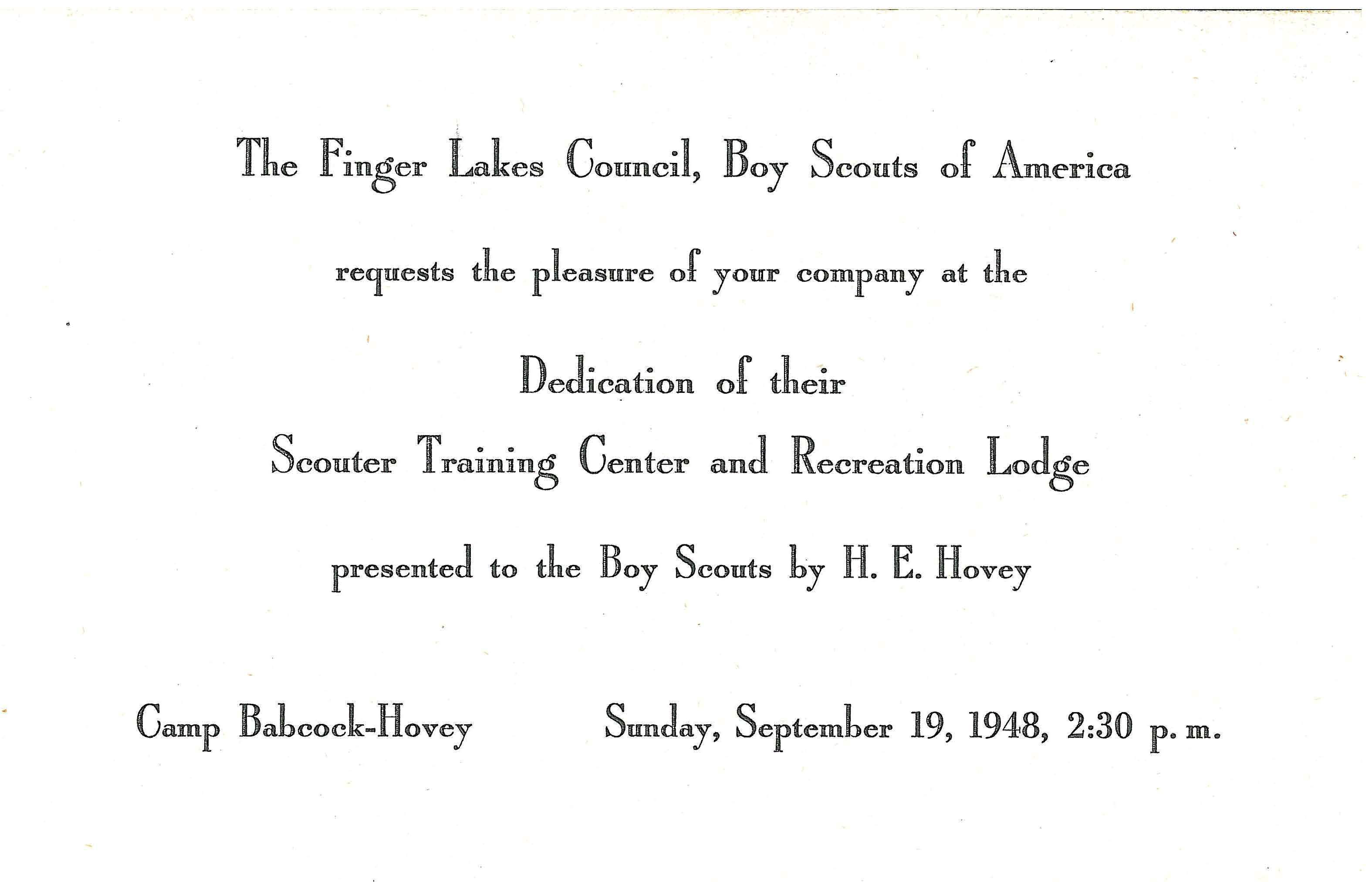
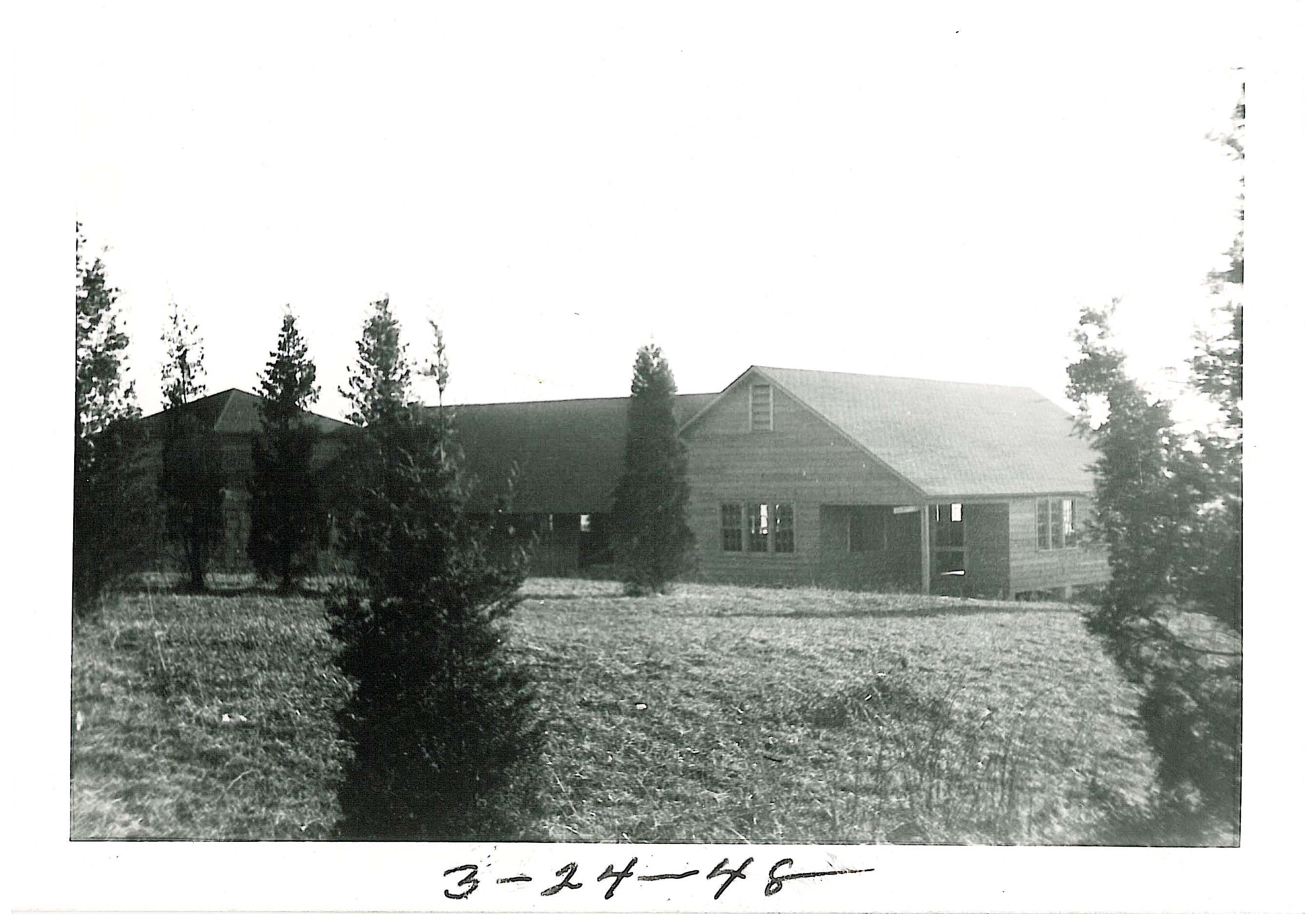
In 1947, Harry Hovey’s interest in Camp Babcock-Hovey was rekindled. He offer to build a conference and training facility to build a conference and training facility to the west of the parade field. When completed, it was will furnished, with a complete kitchen, insulation and heat. It was used as a movie theatre, Church, and general recreation building. After many difficulties, the new Hovey Training Lodge was completed at a cost of $26,705. It was dedicated on September 19, 1948.

Posted in Historic | 1 Comment

Did you see that?

There has been a lot of development in the short stories and we want to make sure you have had a chance to see it all. There are many interesting facts that you may want to take a second look at. I especially like the old totem pole that is in the turnaround near the kitchen. Did you see that one? If you didn’t or even if you did, why not take a second and have a second look at the early years of camp.

#1

Camp Tarion

#2

A Story that most of you have never seen (Camp Tarion Memory book)

#3

Norman J Gould

#4

Harry Weart

#5

The Honorable Nathan D. Lapham

#6

The Transition for Camp Tarion

#7

The Camp Property before there was a Camp

#8

Birton Babcock and Harry Hovey

#9

The Dedication of Camp

#10

The 1930’s as told by Skip Cepuch

#11

Thank You letters to Mr. Babcock and Mr. Hovey

#12

The 1940’s as told by Skip Cepuch

#13

The Legend of Bigfoot as told by Skip

#14

Post Cards from the 1940’s

#15

Skip Cepuch

#16

Newsletter from 1943 – The Red Cedar Whispers

#17

The Wooden Anniversary and the Babcock Chapel

Posted in Historic | Leave a comment

#17 The Wooden Anniversary and the Babcock Chapel

1944 was the wooden anniversary of the opening of camp. The “Babcock Memorial Chapel” was dedicated and Penn Yan Lodge made its way into camp. The “Babcock Memorial Chapel” was a gift of Mrs. Alice Bailey of Phelps. Mrs. Bailey and Wooster College were both benefactors in Babcock’s will. Penn Yan lodge is the only building in camp that bears the name of a village or town. Penn Yan lodge was originally built on Rt. 54A just south of Penn Yan, in what is known as the “Rotary Forest”. It was built for the use of the scouts of Penn Yan. When Babcock-Hovey was being developed, it was decided to dismantle the lodge into sections, to be re-assembled at the new camp. Hence the name “Penn Yan Lodge”.

This slideshow requires JavaScript.

Wooden Anniversary Booklet

Posted in Historic | Leave a comment

#16 Newsletter from 1943 – The Red Cedar Whispers 1943

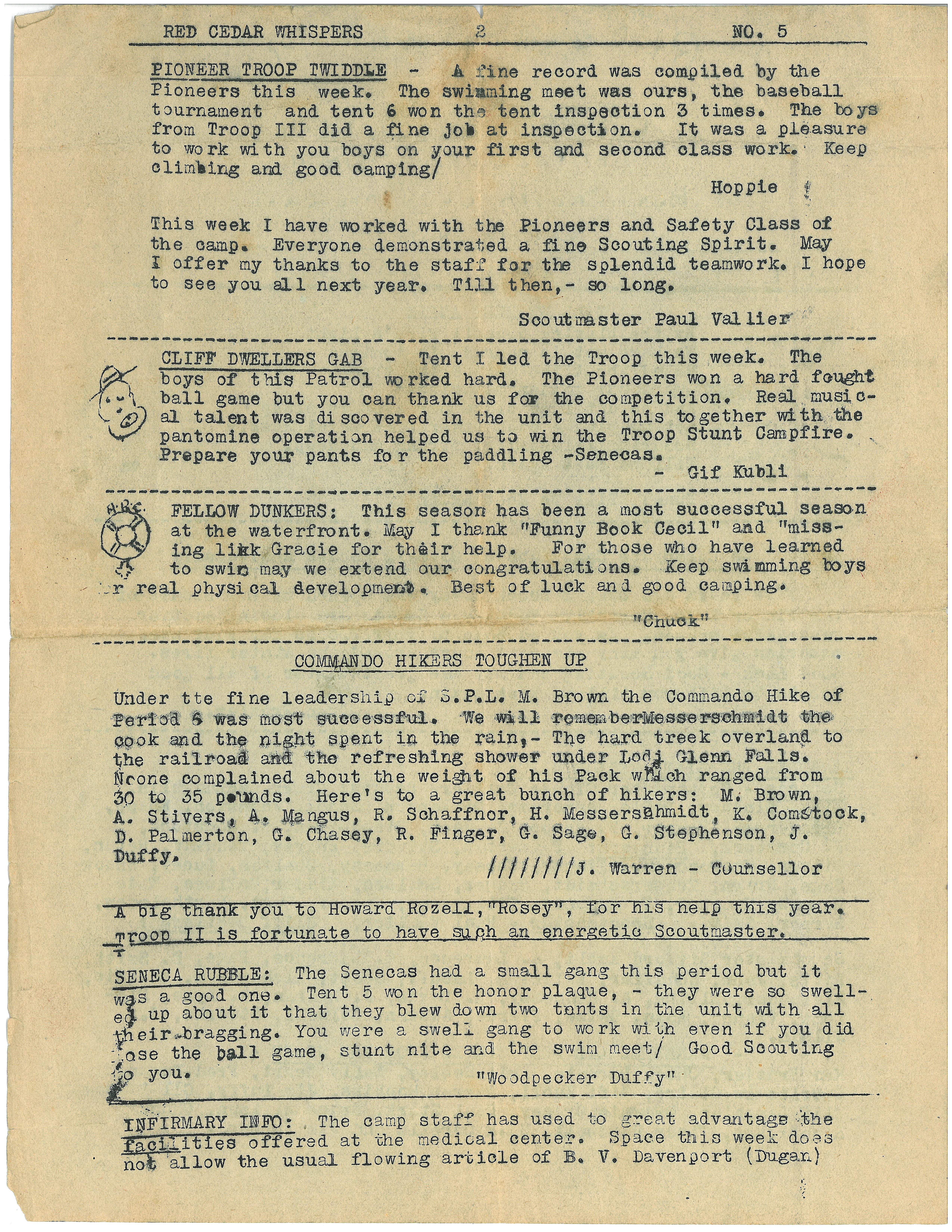
Did you enjoy the Hovey Tribune in 2011? Well in 1943 they didn’t have the Hovey Tribune but “The Red Cedar Whispers”. Check it out below-

Red Cedar Whispers 1943

Posted in Historic | Leave a comment

#15 Skip Cepuch

This slideshow requires JavaScript.

Born on September 15, 1927, Skip grew up in Seneca Falls, New York. He served as a radar man in the US Navy in 1947 and 1948 and sailed around the world aboard the USS Lloyd Thomas. He worked at Eastman Kodak for 30 years, making film emulsion at Kodak Park. After retiring, he and his wife split their time between the Rochester area and Fort Pierce, Florida. Each summer for more than six decades, he spent at least one week at Boy Scout Camp Babcock-Hovey, near Ovid, New York. One of Skip’s proudest accomplishments was receiving lifetime membership in the prestigious “Order of the Arrow,” in recognition of his distinguished service as a Scout leader. Skip’s Vigil name was Nuwingi translating to “The Willing One”. He was a lifelong fan of the Brooklyn Dodgers, even after they moved to Los Angeles. His interests also included golf, the stock market, crossword puzzles and chess. Skip died August 29, 2010.

The Legend of CEPUCH

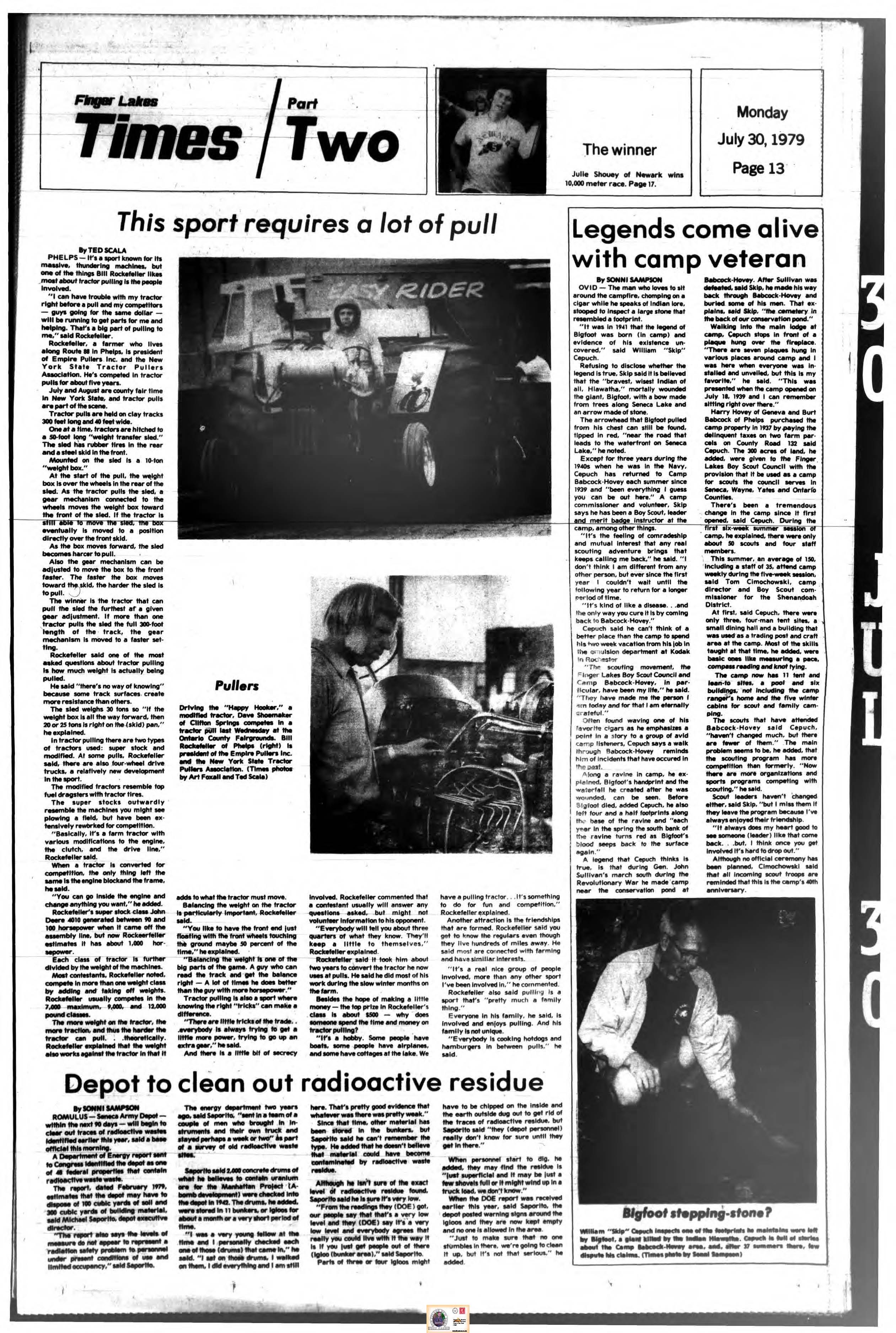
Long ago in the land of the Seneca there lived a giant of a man – CEPUCH! And he loved to flick his cigar ashes all about the area. Well no matter what your size is, nobody likes to walk on flickered ashes. So they sent up their own smoke asking for the help of the craziest and most fiercest scout that ever liver – Tom Kemp! And he came and observed that at about 5:00 every day , CEPUCH went for a wade in the lake. For those that go on camp wide tours a barge is pointed out to them and the recorded thickness of the ashes at that point is 562 feet. This gives you some idea of the number of years he has been smoking the stoggie. After watching him for many days he set his plan in motion to construct a giant sling shot; then he waited. One day when CEPUCH went wading in the lake Kemp cast a rock out to him which put out his cigar and he turned to see who could be so rash as to do such a thing to him. Well what do you do when your cigar goes out; you light a match and you put your hands up to shield the flame from the wind. Tom knew this and at that moment he let the sling shot with it’s cargo go and it struck home. CEPUCH knew he did not have long for this earth. So he plucked the cigar from his lips and threw it to the shore and it landed at the base of what is now Mohican campsite. But TIME and POWER of Seneca lake has moved it to where it now lies. Just as you are making the final turn on the road to the lake font look to your left and there you will see the cigar log with it’s point going out to the lake. If you look closely at it you can still observe traces of cigar ashes still upon it. Then CEPUCH staggered up our north ravine and he dropped his ash can and it created the waterfall located just below the chaplain’s quarters. Well what do you do when you drop your ash can? You put your cigar box down so that you can pick it up. CEPUCH was no different and when he did he forgot to pick up the box up and as a result of years of decay the only remains are a couple of cigars that have petrified in the side of the bank. They’re there; just above the chaplain’s quarters along the road. He kept going until he had reached our chapel area. And it was at this point that he was at his silliest and realized that he was out of cigars and in the wild! After vespers to the right you will notice a trail; it’s not very long’ follow it about 50-100 feet and you will see an area in the earth that looks like it has been scooped out. Come back to camp in the early spring about the end of May and I will guarantee that Skip Cepuch will be there getting in practice for another summer camp season singing “I’ve got that Hovey Spirit” with the famous thumb moving wildly once again. Have a good week Scouts!

(originally presented August 7, 1991 at the Webelos Resident Camp by members of Ganeodiyo Lodge)

Posted in Historic | 3 Comments

#14 Post Cards from the 1940’s

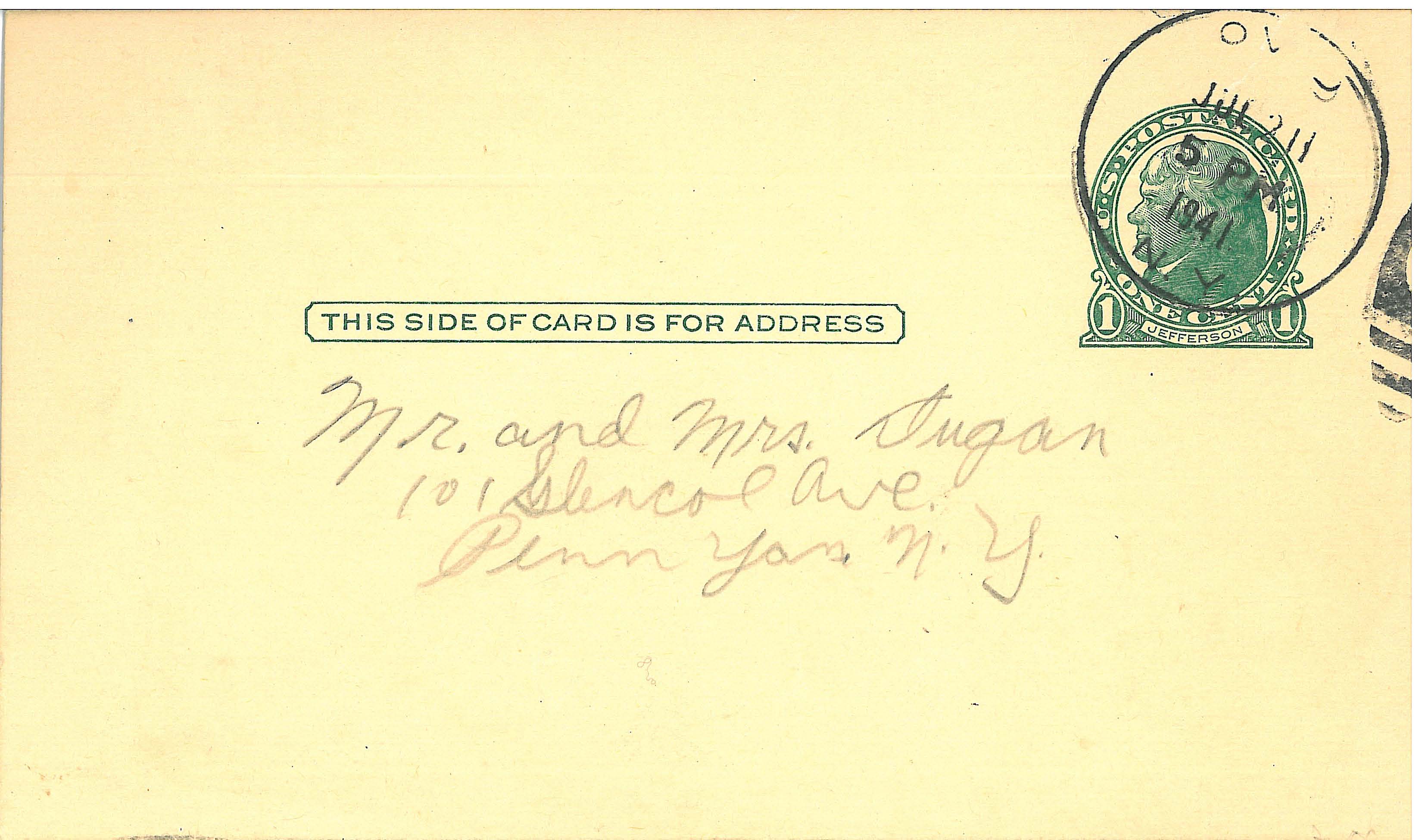
Remember what Skip said happened on Monday’s during the 1940’s? “On Monday at lunch you found a post card under your plate which when it bore a message to someone became your “pass” to the evening meal.” I think that is one tradition that we should bring back. Here is an example of not one but two from the 1940’s. I am happy to find out that they were feed swell in the 1940’s.

Posted in Historic | Leave a comment

#13 The Legend of Bigfoot as told by Skip

Many years ago in this area lived a tribe of Indians and one giant, Bigfoot by name. Now because he was a giant he liked to pick on those smaller than himself. Now no matter what size you may be, no one likes to be picked on. But the smaller Indians did not know just how to handle the situation so they made smoke, sent out runners, and beat upon their tom-toms until finally the word reached the ears of the bravest, wisest, strongest Indian who ever lived, Hiawatha. Hiawatha came and set up camp on the West shore of Seneca Lake and observed. He noted that every afternoon Bigfoot would go for a wade in the lake. With this knowledge he set about creating a giant bow and arrow and when he was finished he waited. That afternoon right on schedule Bigfoot went for his daily wade and Hiawatha called out to him. Bigfoot turned to see who could be so rash as to call out to him. Rember the time of day and the direction Bigfoot was facing and you would have the same problem he had as the sun would get in your eyes also. What do you do when the happens? You raise your hand to shield your eyes that you may see better. Bigfoot did the same only when he did, it left his entire chest area unprotected and at that moment Hiawatha let the arrow go and it hit home. Bigfoot knew he did not have long for this earth  but plucked the arrow from his chest and hurled it upon the shore. When it first landed it was at the foot of the bluff by Mohican Campsite (Blank 2012), but time and the power of Seneca Lake have moved the arrowhead until today it is found by the road that leads to the waterfront. As you go down the hill and make the final turn, look to your left and there you will see it with its point toward the water. Close inspection of the point will reveal traces of Bigfoot’s blood. Bigfoot staggered up our North ravine falling once, his knee creating the waterfall. What do you do when you fall? You put out your hand to help you raise and Bigfoot did the same, but because he was so big he left his fingerprints imbedded upon the South Bank. They are found almost directly across from the old shower house (need to detail were). He continued up the ravine until he reached our Chapel area. Here because he was at his weakest he was also at his heaviest and left embedded upon the floor of the ravine his final footsteps. They are found by going to the Chapel and approaching the Alter (old). On you right you will find a small trail that goes along the top of the bank. Take it and look down and you will see the foot prints. Continue to the end of the trail where the hill side seems scooped out. Come to Camp in the early Spring and look at this hillside for it will be red as Bigfoot’s blood seeps back through the earth once again.

(As written by Skip Cepuch)

Posted in Historic | Leave a comment

#12 The 1940’s as told by Skip Cepuch with historical edits

This slideshow requires JavaScript.

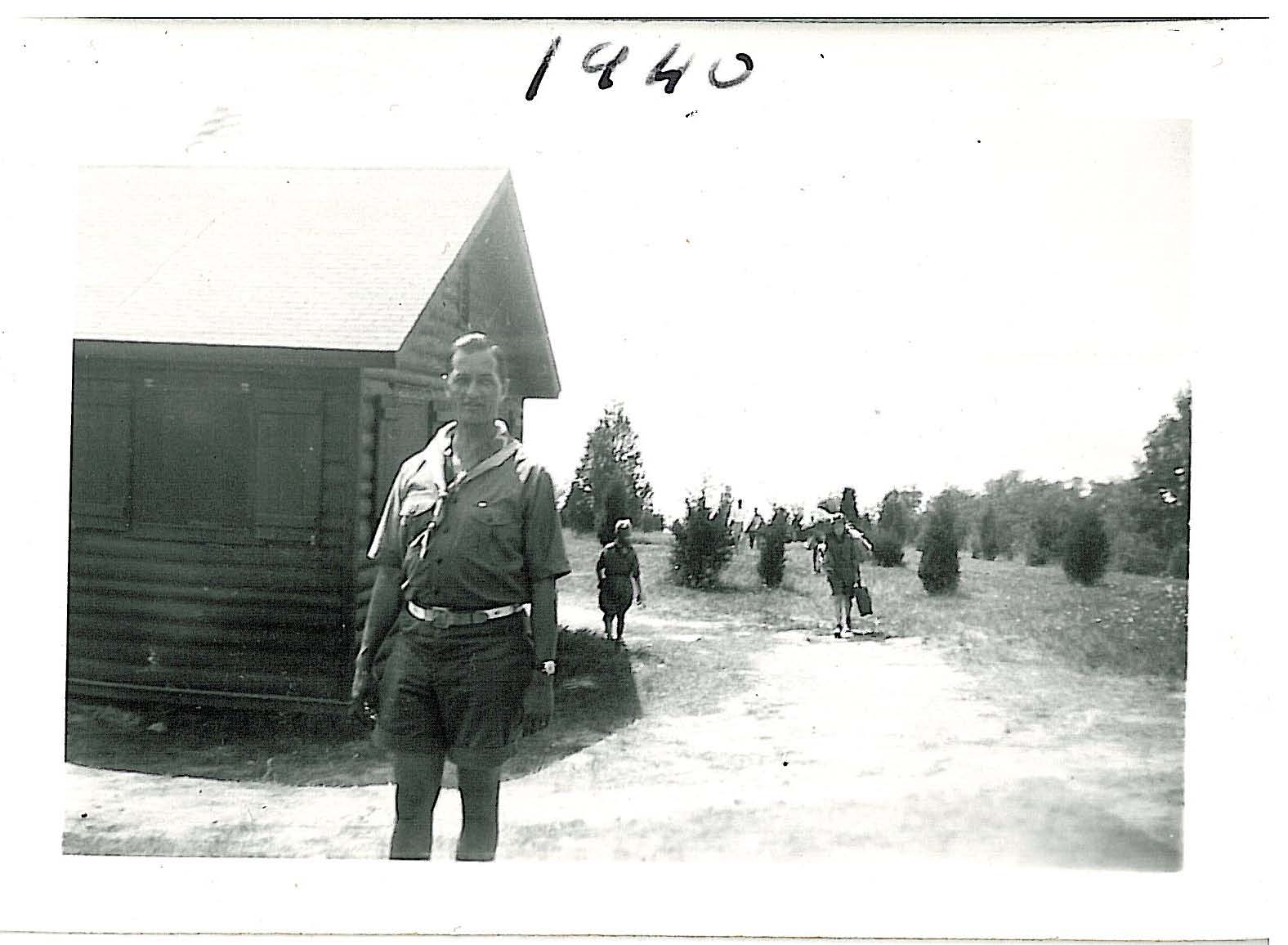
The Scout executive, “Parky” Parkinson was the first camp director, mailman, chaplain, ranger, etc. His able assistants were Sponsler Limbaugh (whose main duties were at the waterfront)  and Arthur Hartwig, (Director of Health and Sanitation).

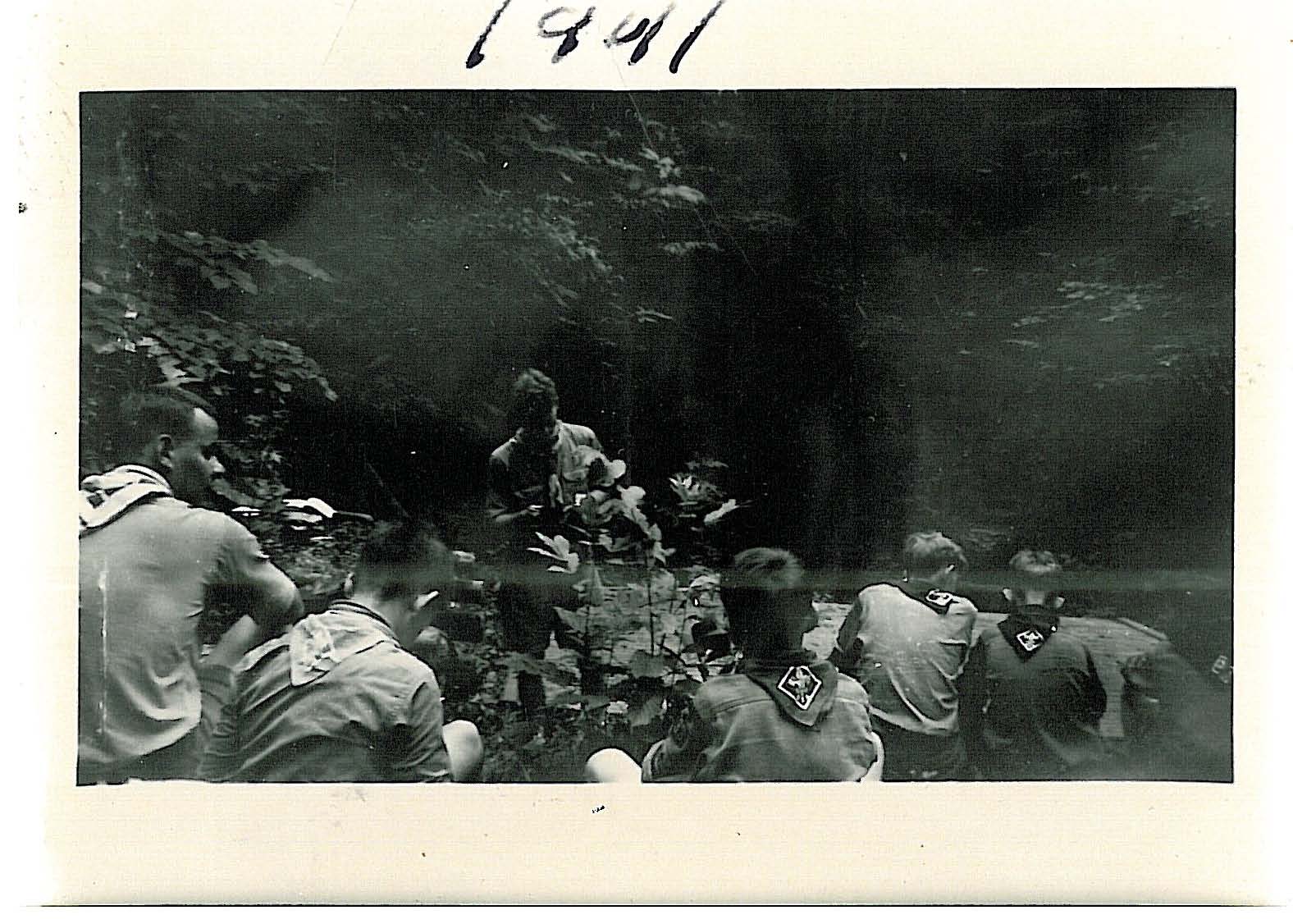
Our meals were prepared by Roy Canfield. They were at the same times they are today and of the same high quality we do so enjoy. However if you were to be a waiter for either the noon meal or the evening one you reported to the kitchen steps after the morning or noon meal to peel potatoes for your “waiter” meal. The steps I refer to are those on the extreme south end on the front of the Lodge. Upon entering the building at this point you might make out the old “in” and “out” doors for the kitchen and where the cooler and sink sat.

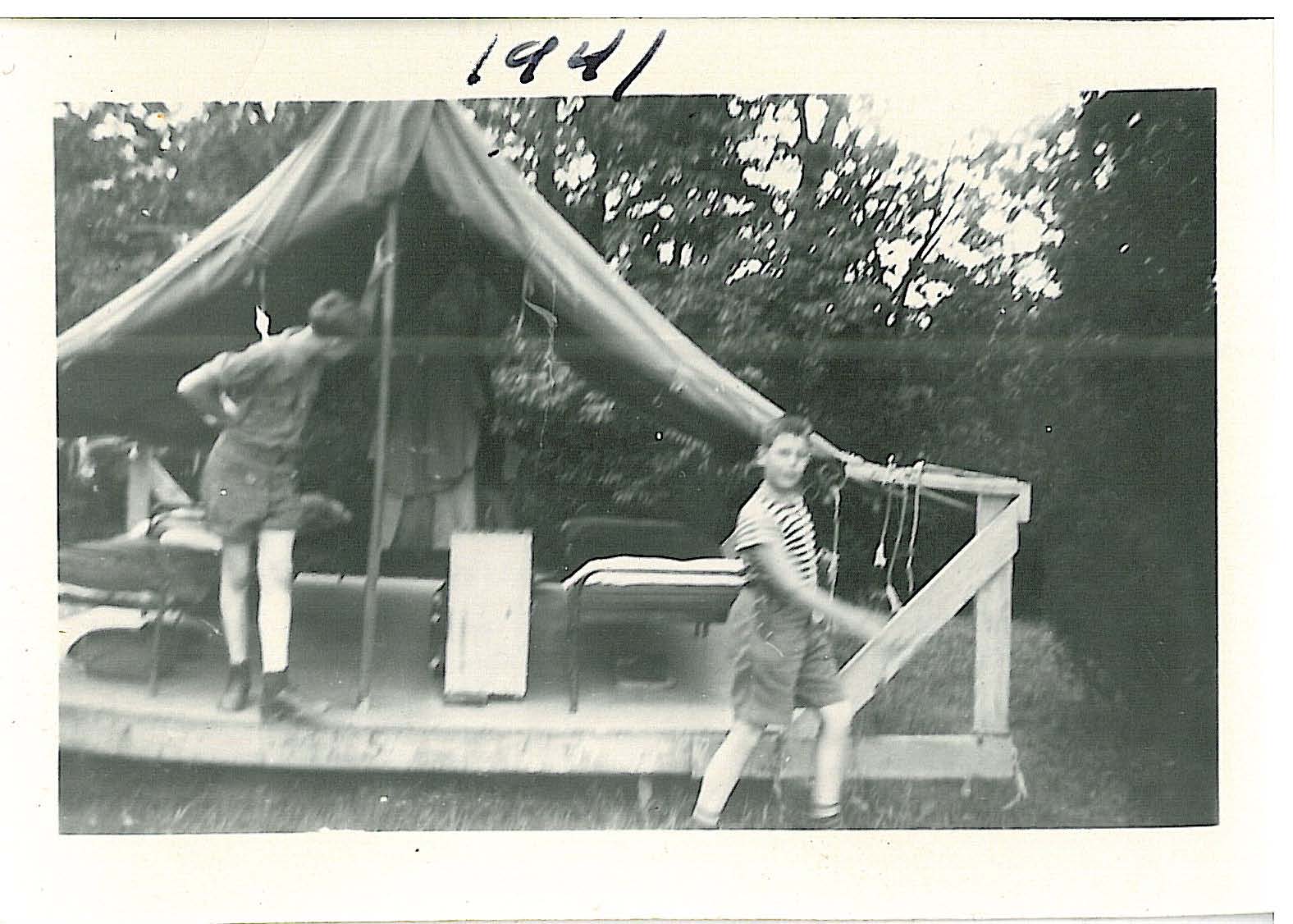
Camp ran from Sunday to Sunday with church services on your departing Sunday. The final meal was Chicken and Dumplings. You came to camp as individuals and camped with people from other communities and were recognized as a site not as a unit.

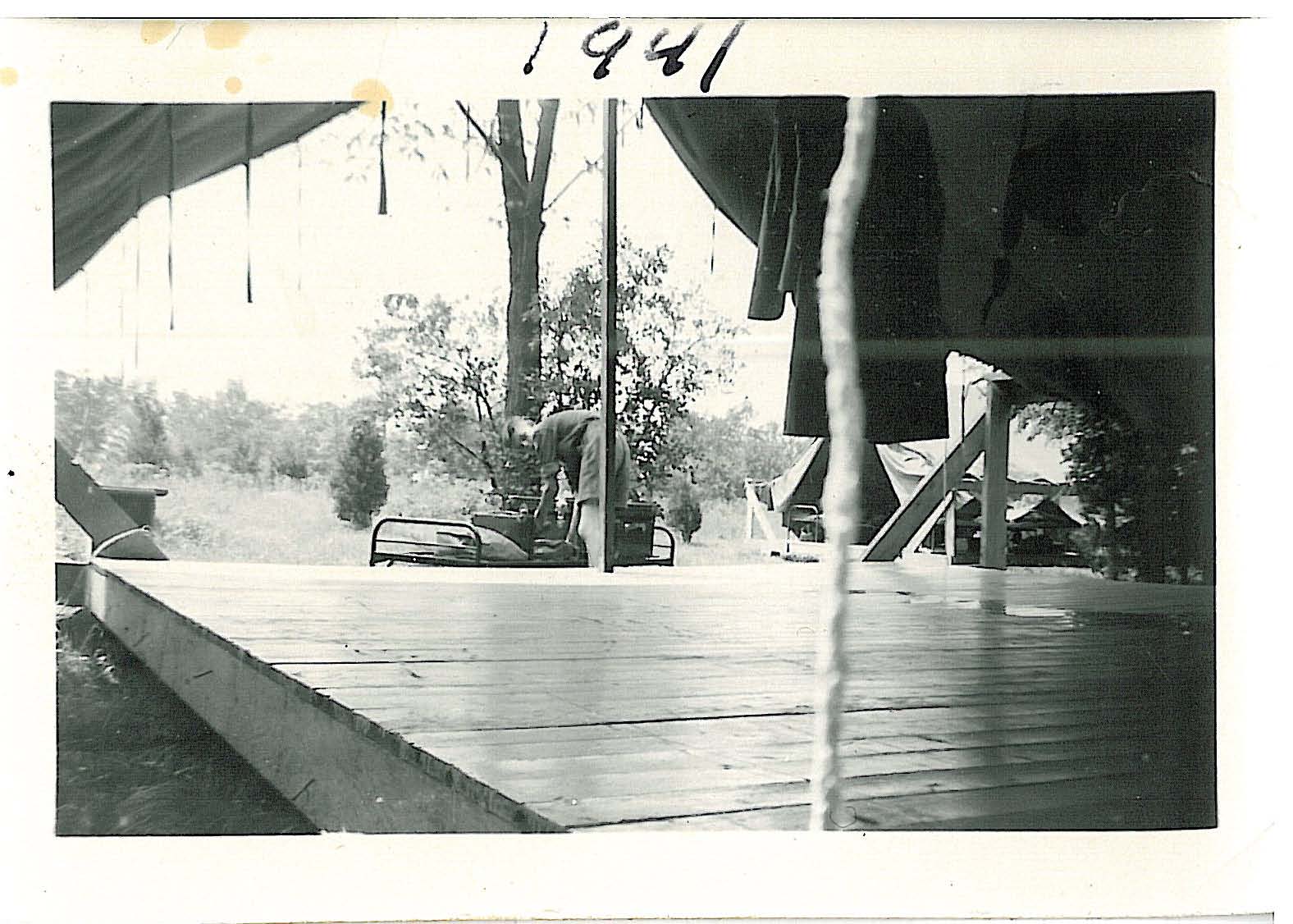
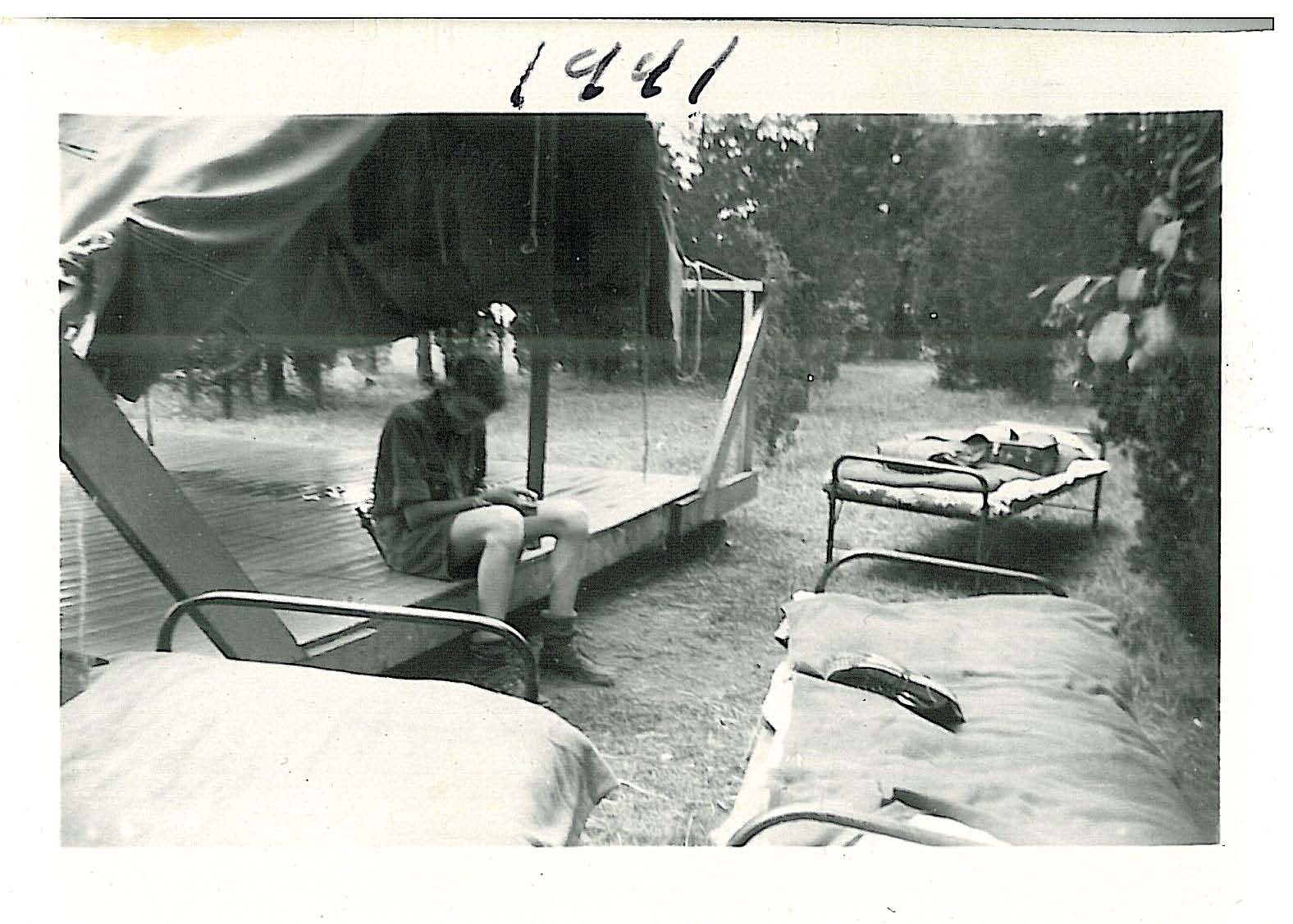
When you first arrived you went through a medical recheck provided by J.(?) Bove of Seneca Falls. Then you got a mattress cover from the maintenance building which you took out in back of the building. Here were bales of straw. You filled your cover with as much as you desired and carried it back to your site and tent. Now came the fun of trying to form a mattress upon which you placed your sleeping bag or blankets. Even so in turning over you had the pleasure of sharp straw ends poking you during the night.

Then came the swimming classifications. These were held at the lake, more fun with cold water, seaweed, stones, etc.

On Monday at lunch you found a post card under your plate which when it bore a message to someone became your “pass” to the evening meal.

Prior to each meal you formed on the parade field in the shape of a hollow square. In the mornings and evenings there were ceremonies for the flag which were aided by a real cannon miniature in size and fired by pulling the attached lanyard. If you think today’s cannoneer send a shivers up your spine with his report you can imagine what the original cannoneer did with his and why this tradition has been continued. After the ceremonies we filed into the dining lodge to our tables with our mouths shut and our hats off. We folded our arms on chests and repeated the proper grace. Once the meal had begun it was pretty much the same as today with waiters getting things, people giving words, leading songs, and putting on stunts. The highlight of the noon meal was mail call. Parky preformed this and every letter that looked like it had been sent by someone of the feminine gender was smelled of to see if perfume could be detected and jests were made to see if it should be “censored”.

On Tuesday, Ken Sutterby of Seneca Falls came out and took pictures of the entire group of campers and staff. You could buy a copy of this picture for $2.00.

On Wednesday you turned in your belt which you got back on Friday with stencils on it for your various accomplishments. In each site someone had been designated as “reporter” and this person turned in stories which were published in the camp newspaper which came out on Friday. There was another person in each site who was the quartermaster. This person was responsible to keep kerosene in the lantern by the latrine and its chimney clean.

Parky made inspections daily much as the commissioners do today but each bunk had to be the same for head and foot, the mattress turned back toward the head and the rest of the gear arranged neatly on the springs. Canvas to be rolled all the way around and clothes lines strung between trees only were encouraged for wet articles and air begging.

Camp fires were held in a site near the waterfall. You might still make out the original rows of seats on the north bank. (Bigfoot’s fingerprints)

I have mentioned two things I believe deserve further information; they are the Chaplain’s Quarters (Memorial Lodge 2012) and the parade field. First the Chaplin’s Quarters. This building was our first trading post and handicraft lodge. The shelves on the porch area were used by campers to work on handicraft items they had purchased though a Dutch door located on the left hand side of the porch. Going straight ahead brought you into the trading post.

One of the most popular items sold was a neckerchief slide. The handicraft director had lengths of colored plastic pipe. You told him what color you desired and with a hacksaw he cut off a piece about 1 ¼” long and gave it to you along with a small piece of Emery cloth with which you removed the saw marks from the ends and flattened one side. When you had done this you turned in your Emery cloth and got a drop of glue on your flattened side to which you affixed a decal you had selected.

The parade ground used to be about 4 feet lower than it is today, at least towards the flag pole and down to the Weart memorial. The original septic system ran under the field and had to be reworked and this accounts for the rise in the ground. This rise covers most of the original concrete base the flag pole site on.

So far I have dwelt largely with the start of camp, what it was like to be a camper and the people involved in getting it all started. Now I shall attempt to list how camp expanded as time went along.

In 1940 the Penn Yan Building arrived. This building is unique as it was built in Penn Yan and then brought to camp. Originally it served as our first aid lodge, then it became a winter sleeping quarters and even later it became our camp office.

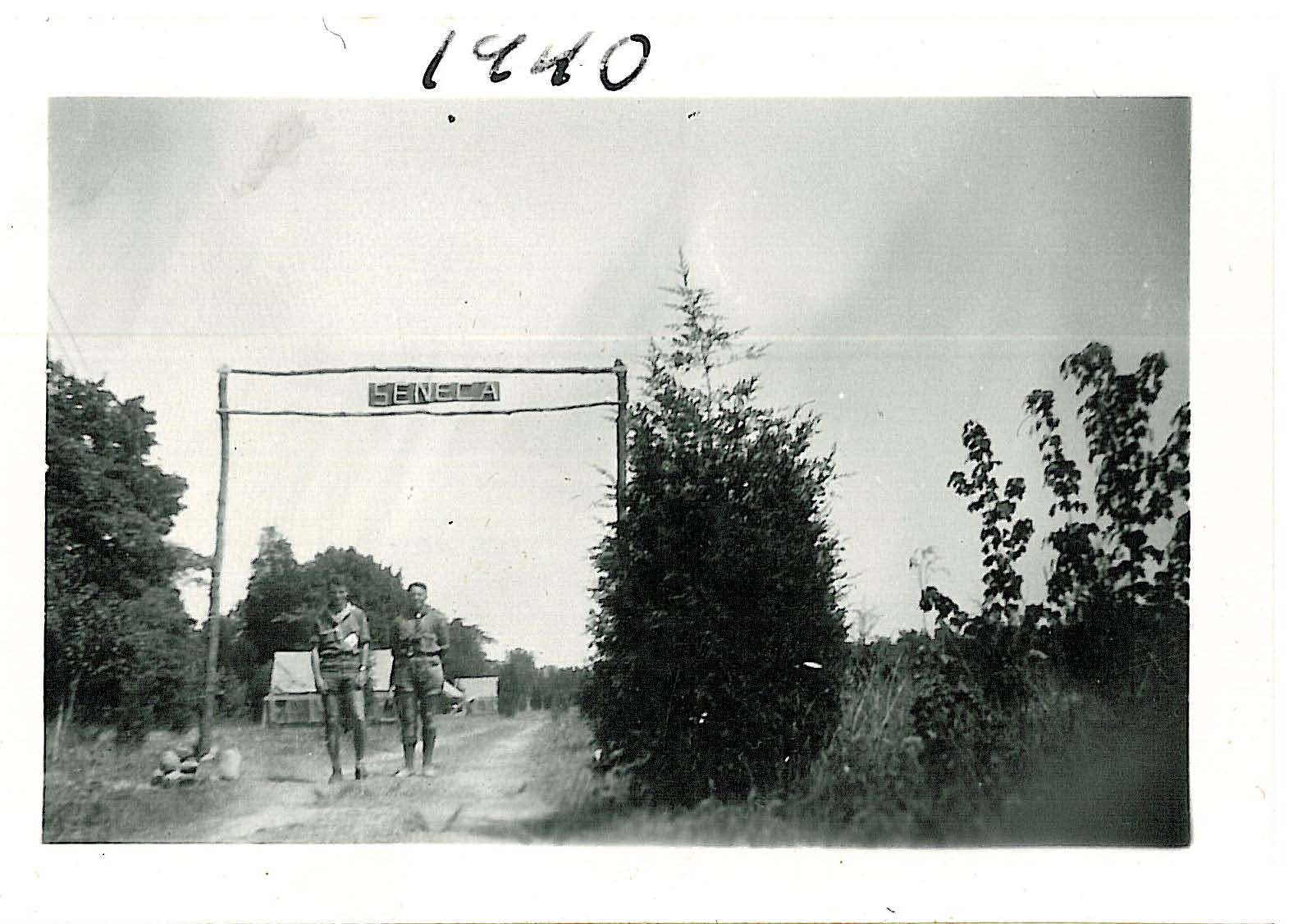
In 1941 Seneca site was built as a site for older boys and thus became our first Lean-to site. It was reached by the trail which runs along the ravines bank on the North side of Onondaga site, only when you came to where the stairs sit today it was the entrance to a high bridge supported by guy wires. If you stand in this spot and look to the North you may pick out some trees bearing circular scars left by these wires.

It was at this time that the legend of Bigfoot was created as a device to help campers learn their way around camp. This was also the year that all the Scouts of the council planted trees in what is now our Nature area (1987) (NAC Area 2012).

In 1948 Hovey lodge was built and used as a movie theatre, Church, and general recreation building. You still might make out the faint outlines of the shuffleboard court on the floor. It was at this time the Ranger’s House was built and our first full time Ranger, Vernon Brown was hired. This year also brought the Order of the Arrow to Hovey and J. Walter Keating and Gordon MacLaren were its first inductees.

Tuscarora site same in 1949 and is was our second lean-to site.

Posted in Historic | Leave a comment

#11 Thank You letters to Mr. Babock and Mr. Hovey

A thank you can go a long way. Check out these letters from Scouts thanking Mr. Hovey and Mr. Babcock for thier donation to the Scouting program. I especially like the one that named the wrong lake for camp and then corrected it.

Thank You 1

Thank You 2

Thank You 3

Posted in Historic | Leave a comment